Published
Tray count, temperature range and airflow decide whether a machine suits you. Work backwards from one batch rather than from the price list.
Most people choose a dehydrator by price and regret it in either direction: a machine too small to finish a day’s produce, or one that spends the year holding four trays. The useful question is not "which is the best one" but "what does one batch look like for me, and how often will I run it".
Weigh what you actually want to dry in a single run, fresh. Fruit loses roughly seven-eighths of its weight, so eight kilograms of sliced mango leaves about one kilogram of product — but it is the fresh volume that has to fit on the trays, not the dried.
A 12-layer cabinet holds roughly 4–6 kg of sliced fruit and suits a household or a home business running a few batches a week. A 20-layer suits a shop or a caterer running most days. A 32-layer only earns its floor space if you are drying daily and selling the output.
A range of 30–90 °C covers everything you are likely to dry: herbs at the bottom, fruit at 55–60 °C, meat at the top. The number on the dial matters far less than whether the thermostat holds it. A cabinet that overshoots by ten degrees will case-harden fruit — a dry shell over a wet centre — and you will not find out until the bag spoils two weeks later.
Horizontal airflow from a rear fan moves air across every tray at roughly the same rate. Even then the trays nearest the fan finish first, which is why rotating them once around the halfway point is standard practice rather than a sign of a fault.
Stainless steel trays matter more for meat than for fruit: they take a hot wash and do not hold the smell of the last batch.
Tray count against one real batch, weighed fresh.
Whether the thermostat holds its setting, not just the range printed on the box.
Whether spare elements, fans and controllers are held locally — an imported part is a month of downtime.
The warranty, and what it actually covers. Ours is 12 months on the element, fan and controller.
If you are drying a few kilos of chillies each summer for your own kitchen, a charpai and a muslin sheet will do it and cost nothing. A cabinet starts to pay when the output is for sale, when the weather is against you, or when a failed batch costs more than the electricity to run it properly.
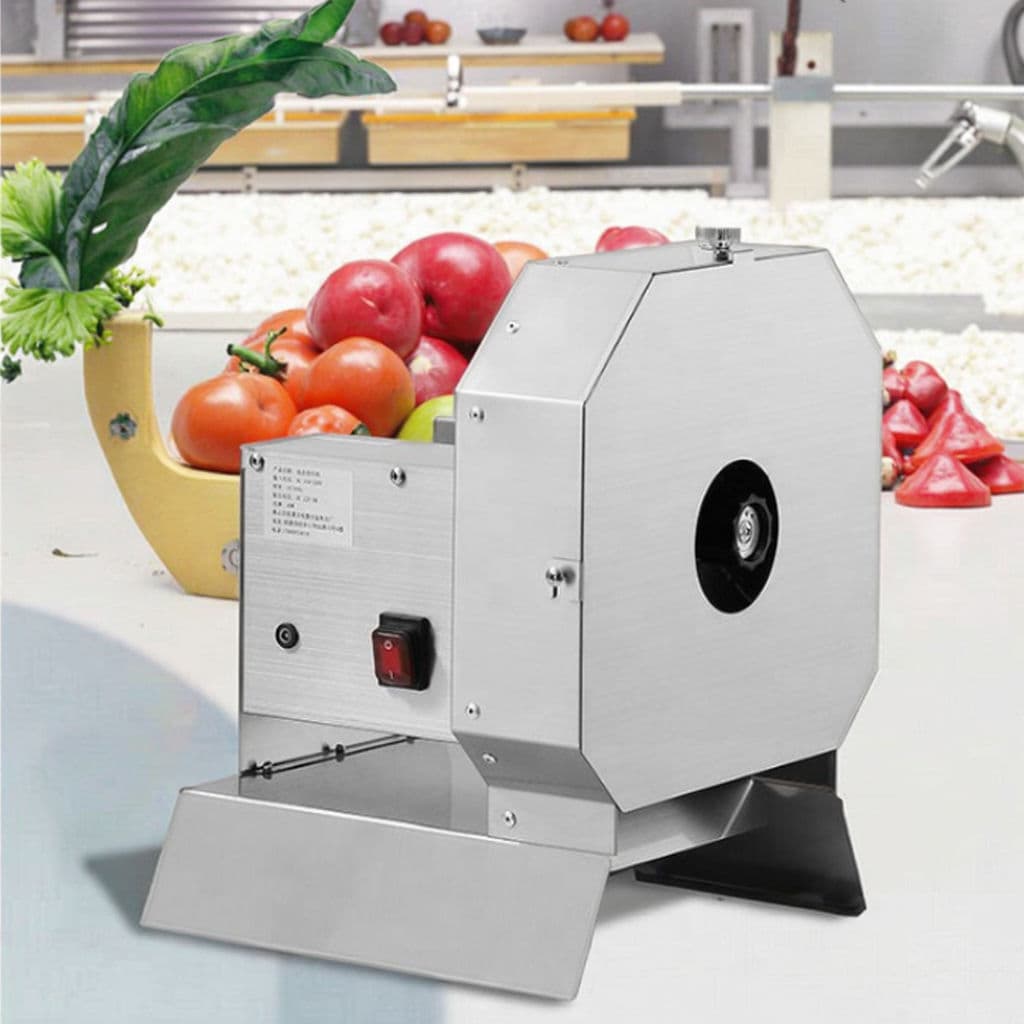
Model Number Commercial Slicer Included Components 1 x Electric Food Slicer Additional Features Adjustable Thickness Operation Mode: Manual and Electric Material Type : Stainless Steel Blade Material Type : Stainless Steel Item Dimensions : L x W x H 10.8″L x 9.8″W x 16.1″H (27.4 x 24.9 x 40.9 cm) Item Weight 16.1 Pounds (7.3 kg) Color: Silver
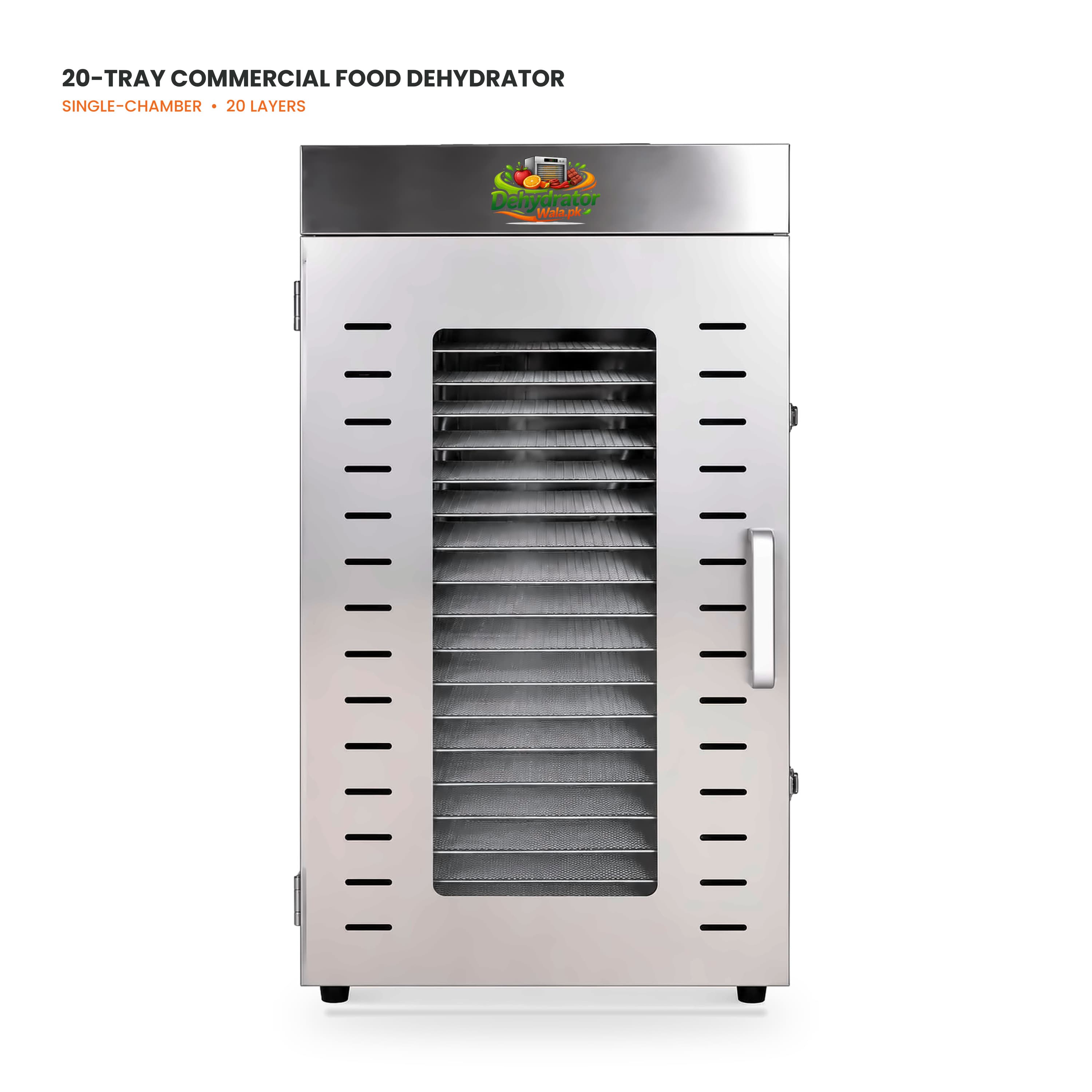
Material Type SUS201 Body+SUS304 Tray Mesh Tray QTY: 20 Layers Internal Volume: 0.13m³ (130L) Yield: 30-35 kg Fan Motor: 2pcs Frequency: 50/60HZ Heating Power: 1500W /750 W after maintain tempure Voltage: 110/220/240V Tray Size: 40*40CM Tray Distance: 3cm Temperature: 30-90℃ G.W/N.W: 20 KG Size of Product: 475*560*830MM Size of Package: 635*525*925MM Volume: 0.31CBM
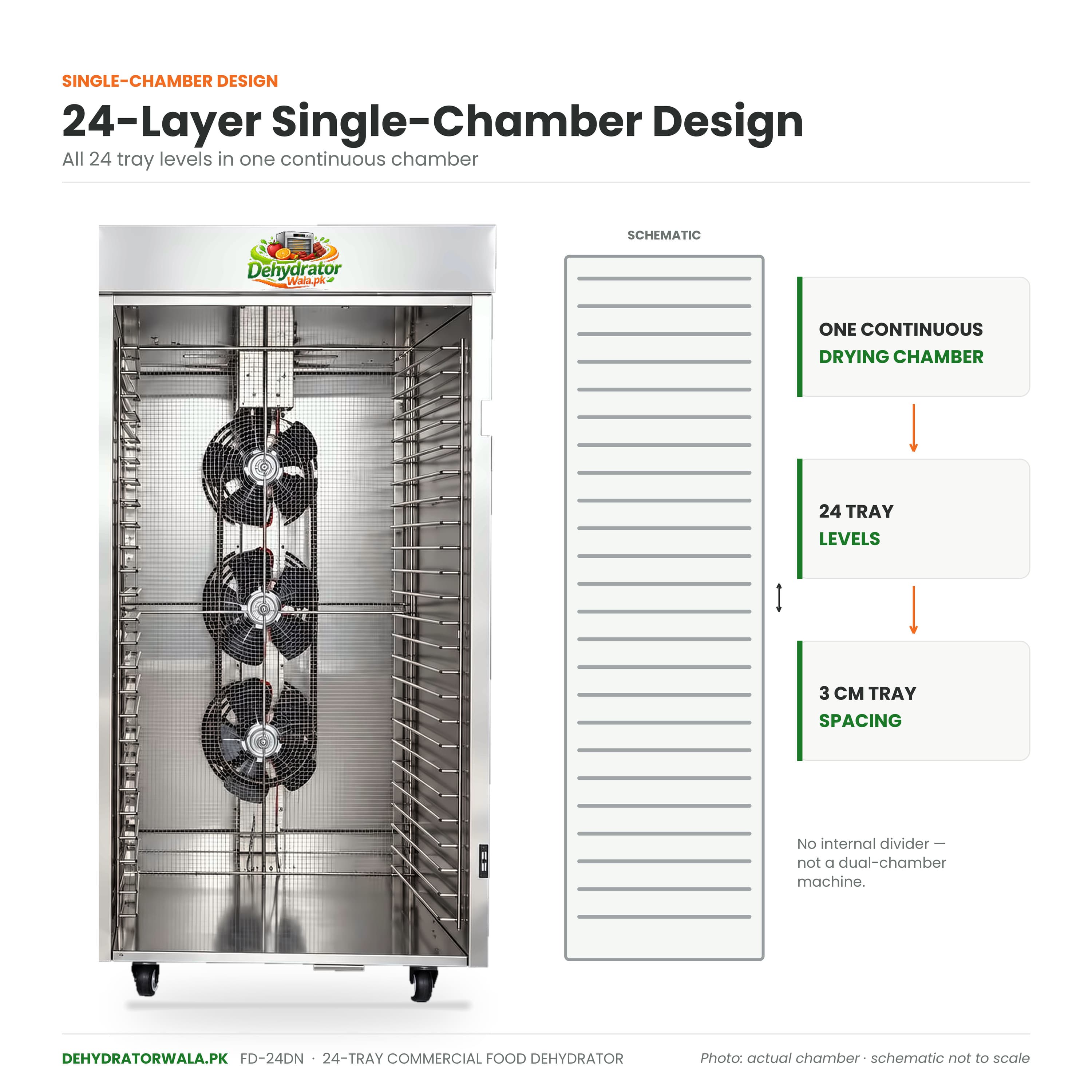
Material Type SUS201 Body+SUS304 Tray Mesh Tray QTY: 24 Layers Internal Volume: 0.13m³ (130L) Yield: 65-100kg Fan Motor: 3pcs Frequency: 50/60HZ Heating Power: 2000W Voltage: 110/220/240V Tray Size: 40*40CM Tray Distance: 3cm Temperature: 30-90℃ G.W/N.W: 48/40kgs Size of Product: 475*560*830MM Size of Package: 635*525*925MM Volume: 0.31CBM