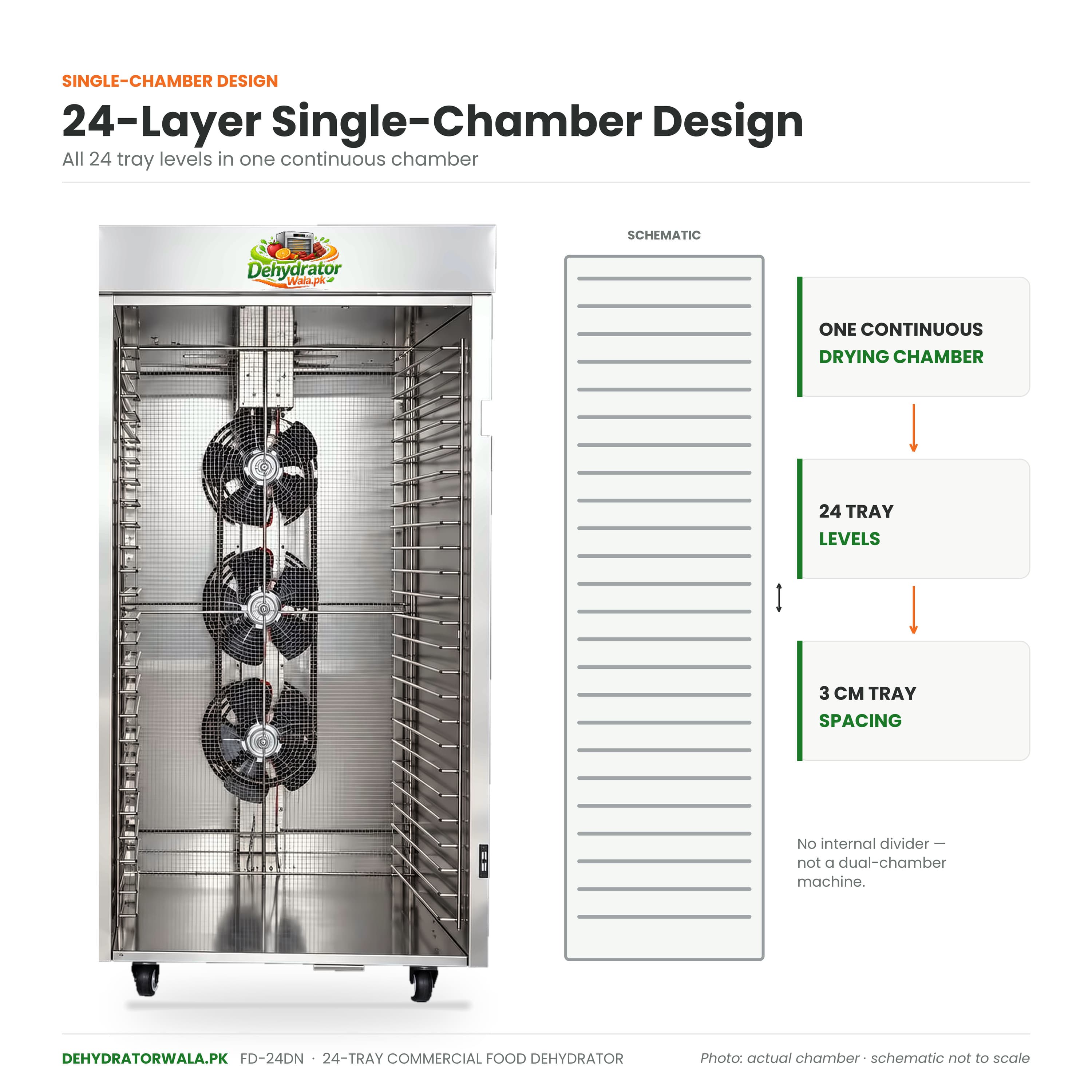
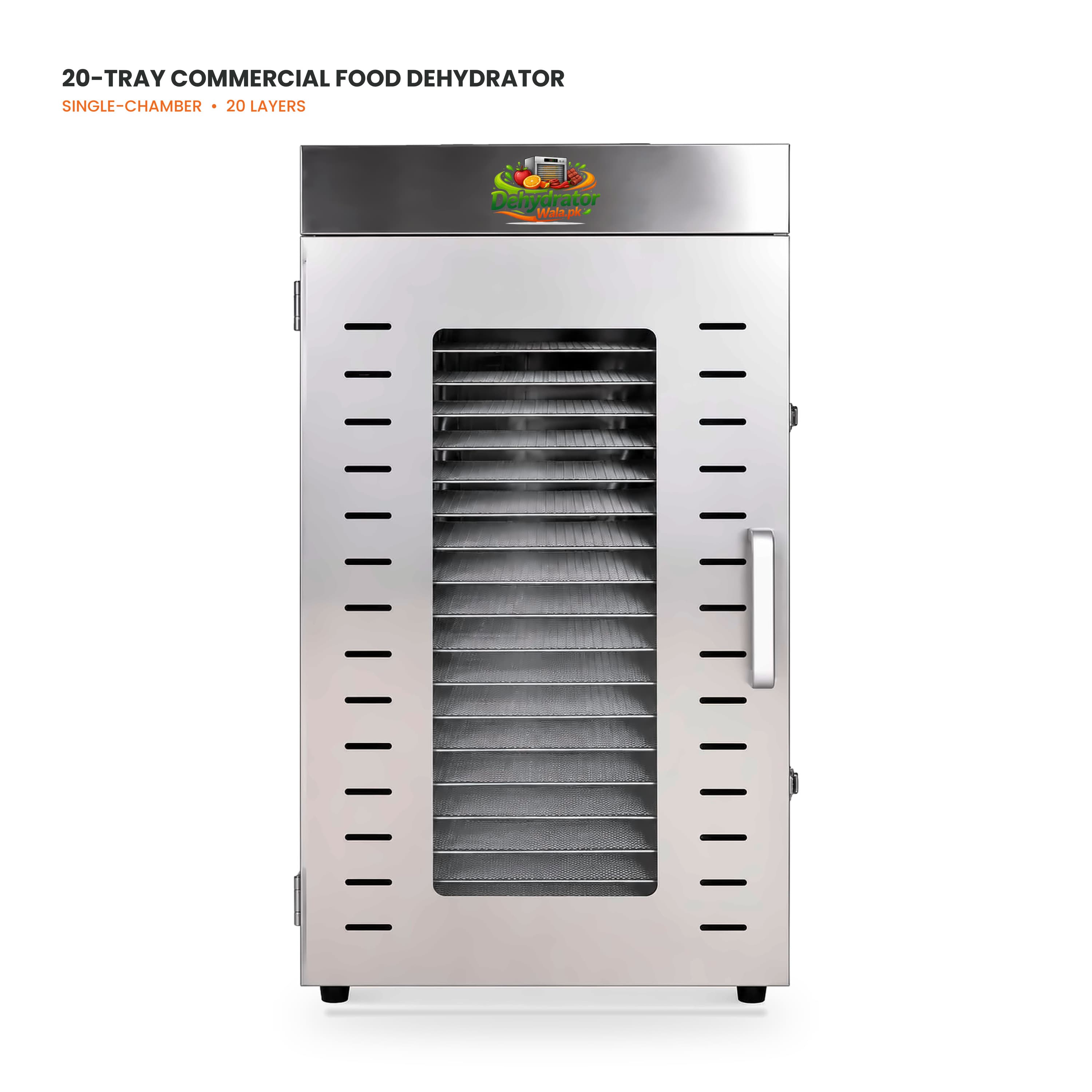
20 trays30 kg / batch
20 Trays Commercial SS Food Dehydrator Machine in Pakistan with Memory Function
Best for: Small businesses
Material Type SUS201 Body+SUS304 Tray Mesh Tray QTY: 20 Layers Internal Volume: 0.13m³ (130L) Yield: 30-35 kg Fan Motor: 2pcs Frequency: 50/60HZ Heating Power: 1500W /750 W after maintain tempure Voltage: 110/220/240V Tray Size: 40*40CM Tray Distance: 3cm Temperature: 30-90℃ G.W/N.W: 20 KG Size of Product: 475*560*830MM Size of Package: 635*525*925MM Volume: 0.31CBM
Rs 130,000In stock · 12-month warranty